International exchange with Tukena (Finland): innovation, community, and rights at the core
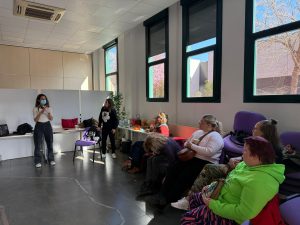
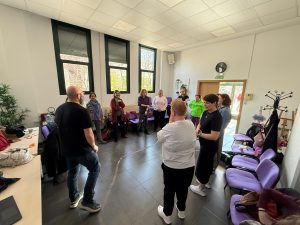
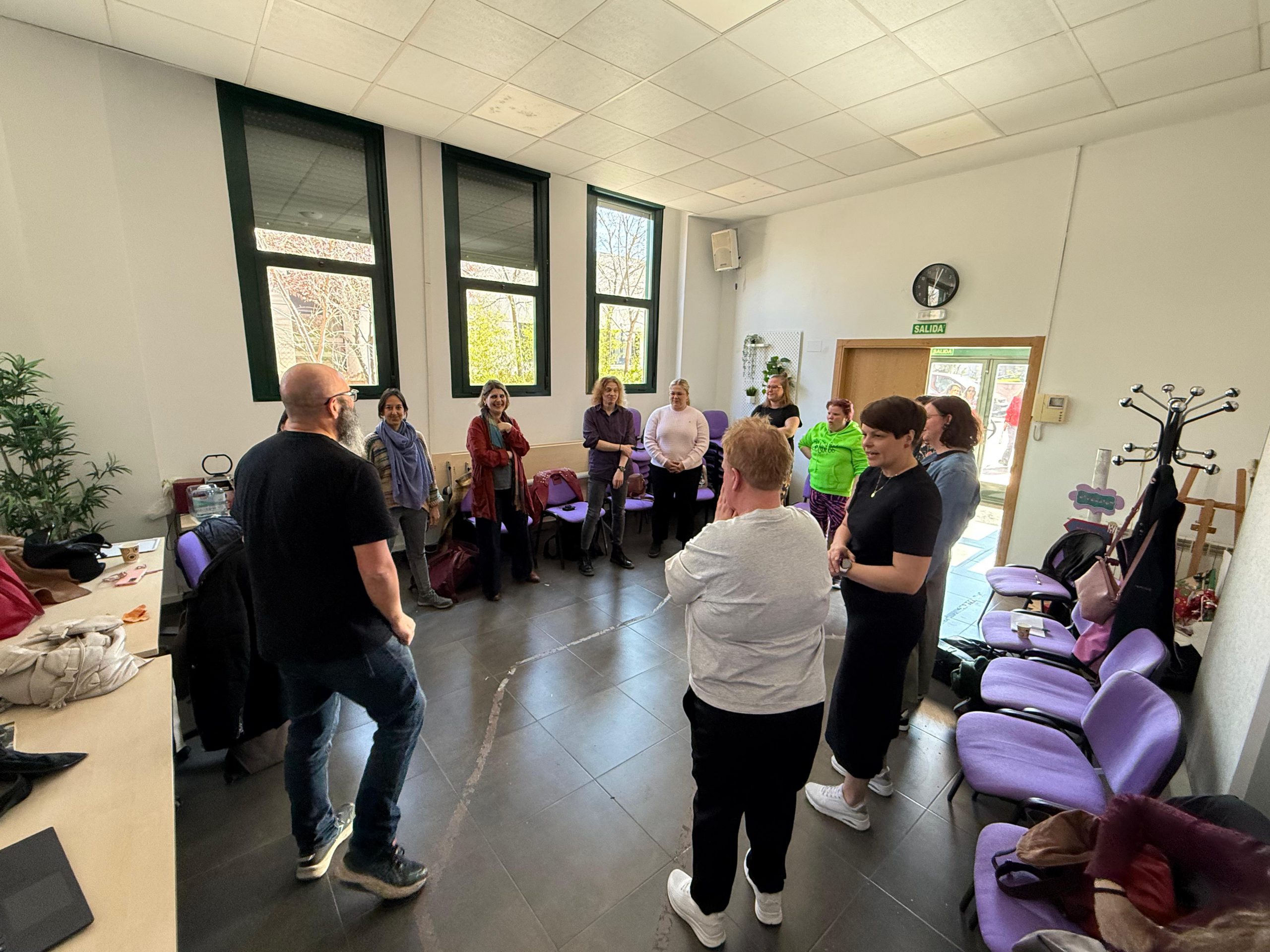
Thanks to the mediation of Plena Inclusión, HOGAR SÍ recently welcomed a delegation of professionals and service users from Tukena, a Finnish organisation specialising in support for people with intellectual disabilities. Although the delegation’s itinerary focused on organisations within their own sector, they showed particular interest in community‑oriented, rights‑based projects—prompting a dedicated exchange session around HOGAR SÍ’s main solutions and methodologies.
During the meeting, we presented HOGAR SÍ’s purpose, our lines of work, and several projects that embody our housing‑based intervention approach. Among other topics, we covered autonomous, deinstitutionalising housing solutions, health‑related support interventions, and employment‑oriented accompaniment models. We also explored key methodological principles such as person‑led planning, co‑production in project design, and the evolution of professional support roles.
Key elements of our approach shared with the Finnish delegation
Throughout the visit, we highlighted components of our model that may be especially relevant for organisations transitioning toward housing‑ and community‑based solutions:
- Housing as the starting point for exercising rights, understood as the foundation for other essential life domains such as health, employment, autonomy, and social participation.
- Autonomous, deinstitutionalising housing solutions, facilitating the shift from collective residential settings to homes integrated in the community, with support tailored to needs and preferences.
- Flexible, person‑centred support models, adapted to individual rhythms, needs, and decisions, avoiding institutionalising dynamics.
- Mechanisms for participation and co‑production, recognising first‑hand experience as essential to design, evaluate, and improve pertinent and effective interventions.
- Prevention and resolution of homelessness, addressing it as a matter of rights that requires structural, coordinated, and evidence‑based responses.
- The importance of a community perspective, emphasising connection to local resources, proximity networks, and territorial dynamics that contribute to housing stability, everyday wellbeing, and life in community.
Why a study visit like Tukena’s is valuable
The fact that the delegation comes from Finland adds distinctive value: Finland has a well‑known European track record in reducing homelessness through person‑centred methodologies and stable housing with tailored supports, underpinned by solid evaluation systems and cross‑sector coordination. This know‑how is especially useful to refine our autonomous, deinstitutionalising housing solutions and to better address the intersection between homelessness and other circumstances (disability, mental health, gender‑based violence, youth), where Finnish organisations bring highly transferable insights.
HOGAR SÍ’s international focus: why it is essential
Homelessness is a structural European challenge. Its scale and the persistent pressure of housing costs—especially in urban areas—demand coordinated frameworks and shared standards. This is why our international work prioritises aligning solutions with European rights‑based frameworks and strengthening harmonised measurement, evidence‑informed policy, and investment in housing with supports. International collaboration is therefore not ancillary; it is a lever for accelerating the end of homelessness and for making the right to a home effective in practice.
These collaborations strengthen our practice, broaden our networks, and contribute to HOGAR SÍ’s central objective: ensuring that everyone has a home from which to exercise their rights and participate fully in community life.
Kiitos! (Thank you!)
Moi, moi! (See you soon!)